

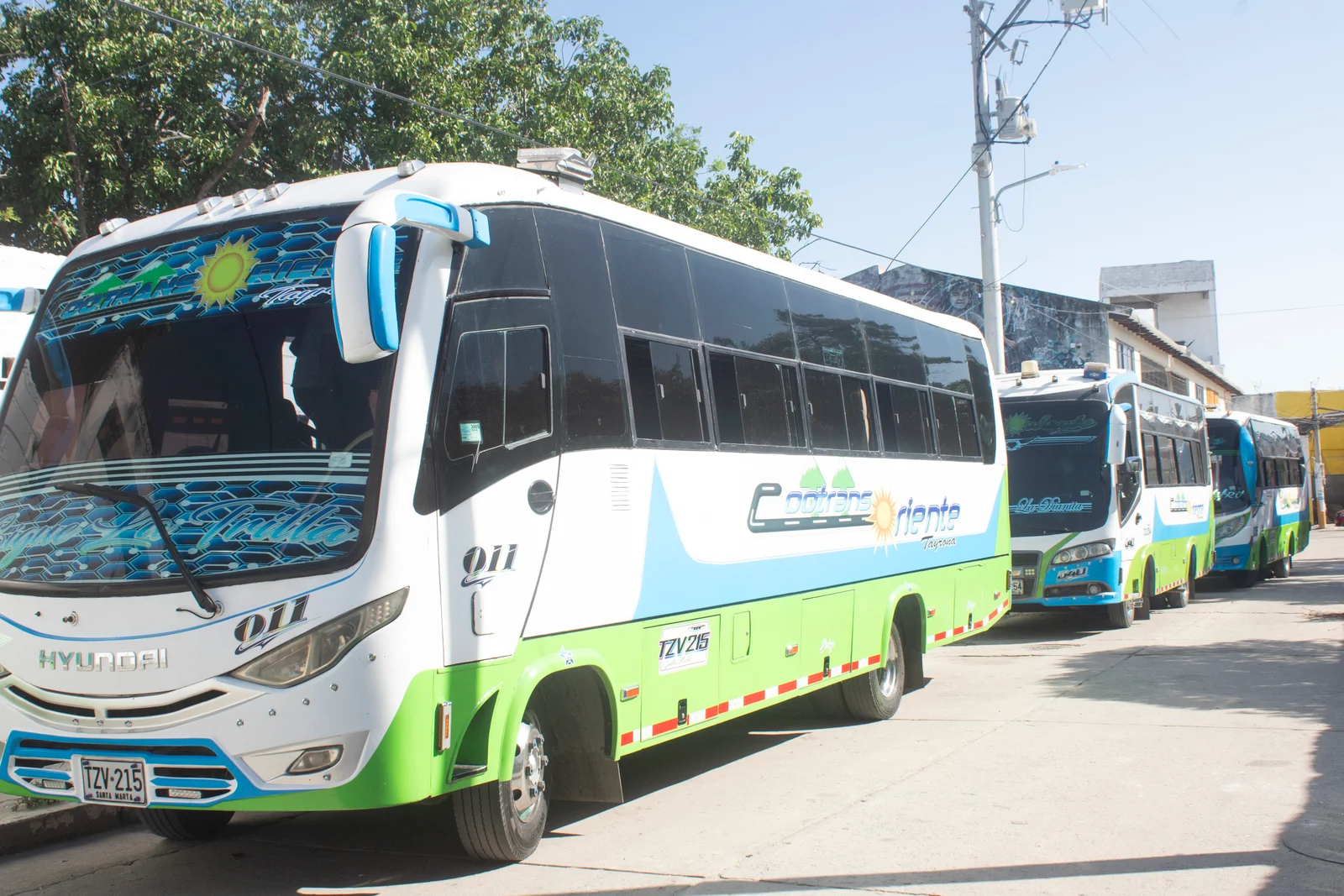
Forget expensive taxis and complicated transfers. If you want to travel like a local along the Caribbean coast of Santa Marta — all the way to Tayrona National Park and beyond — there’s one legendary option that travelers rarely know about: the Cootransoriente Tayrona bus.
It’s blue, it’s frequent, it’s incredibly affordable, and it goes almost everywhere you need to go.
🚌 What Is the Cootransoriente Tayrona Bus?
Cootransoriente Tayrona is a transport cooperative founded in 1982 that has been connecting Santa Marta with the villages, beaches, and jungle communities along the Troncal del Caribe highway for over 40 years. Today it operates with 52 active members and is the leading public transport provider on the eastern corridor of Santa Marta — covering everything from the Tayrona entrance all the way to Palomino and beyond.
It’s not a tourist shuttle. It’s the real thing — the bus that locals, farmers, surfers, and seasoned travelers use every day. Riding it is as much a part of the experience as the destinations themselves.
🗺️ The Destinations: What Awaits at Each Stop
This is where the Cootransoriente bus truly earns its reputation. Each stop along the Troncal del Caribe opens a door to a completely different experience — from world-class national parks to hidden beaches, jungle pools, and laid-back coastal villages.
Neguanje / Peaje — Gateway to Playa Cristal The first major stop heading east from Santa Marta, Neguanje is the starting point for reaching Playa Cristal — consistently ranked among the most beautiful beaches in Colombia. From the highway, you’ll take a short boat ride across the bay to reach the beach, where the water is impossibly turquoise and the coral reefs are alive with color. This is a great half-day trip that can easily be combined with a return to Santa Marta or continued further east.
Calabazo — The Trekker’s Entrance to Tayrona Calabazo is the back door into Tayrona National Park — and the preferred entry point for hikers and adventurers. From here, a challenging but stunning trail winds through dense jungle for approximately 10 kilometers before reaching Playa Brava and eventually Cabo San Juan, one of the most iconic beaches in Colombia. Unlike the main Zaino entrance, Calabazo is quieter, less crowded, and gives you the feeling of genuinely discovering the park. Plan for a full day and bring plenty of water.
Mendihuaca — The Enchanted Pool & a Hidden Beach Mendihuaca is the stop for the famous Poza Encantada (Enchanted Pool) — a crystal-clear natural swimming hole fed by the Sierra Nevada mountains where freshwater fish swim freely around you. But Mendihuaca has more to offer than just the pool. The beach at the mouth of the Mendihuaca River is one of the most beautiful and least visited on the coast — calm waters, local fishing boats, and almost no crowds. A perfect combination of river and sea in one afternoon.
Cañaveral — The Heart of Tayrona National Park Cañaveral is the closest bus stop to the main entrance of Tayrona National Park at El Zaino. From here, the park’s most famous beaches — La Piscina, Boca de Saco, and Cabo San Juan — are accessible via well-marked jungle trails. This is the classic Tayrona experience: ancient jungle, massive boulders, howler monkeys overhead, and beaches where the jungle meets the Caribbean sea. If you’re visiting the park for the first time, this is your stop.
Don Diego — Surf, Kite & Slow Living Don Diego is one of those places that travelers stumble upon and end up staying longer than planned. The wide beach at the mouth of the Don Diego River is known for kitesurfing, river tubing, and an atmosphere of complete relaxation. There are no big hotels here, no nightclubs — just hammocks, fresh fish, and the sound of the Caribbean. A perfect stop for those who want to escape the backpacker scene without going too far.
Palomino — The Crown Jewel of the Colombian Caribbean The final major destination on the route, Palomino has become one of the most beloved destinations on the entire Colombian coast. Its wide, windswept beach stretches for kilometers, the Don Diego and Palomino rivers offer tubing and swimming, and the village has developed a thriving ecosystem of yoga retreats, boutique hostels, and farm-to-table restaurants. It’s the kind of place that attracts digital nomads, wellness travelers, and anyone looking for a slower, more intentional pace of life. From Santa Marta, it’s just $14,000 COP away.
⏰ Schedule & Frequency
This is where the bus really shines. Buses depart every 12 minutes, from 4:40 AM to 6:00 PM, seven days a week. You don’t need to plan around a schedule — just show up at the stop and one will come shortly. This kind of frequency is rare even in major Colombian cities, making it one of the most reliable transport options on the coast.
💰 Fares
All fares depart from Santa Marta/2026: (May change without notification)
| Destination | Fare |
|---|---|
| Neguanje / Peaje | $6,000 COP |
| Las Tinajas, Cacahualito, Paloquemao | $8,000 COP |
| Calabazo, La Estrella, La Revuelta | $9,000 COP |
| Cañaveral, Mendihuaca, Guachaca | $10,000 COP |
| Buritaca, Don Diego, Perico Aguao | $11,000 COP |
| Palomino | $14,000 COP |
📍 Where to Board in Santa Marta
The bus has three pickup points:
- Mercado Público — Carrera 9 con Calle 11 (most convenient for tourists)
- Sede Mamatoco — Diagonal 39 No. 5-148 Local 2
- Sede Administrativa — Carrera 13 No. 11-60
The Mercado Público stop is the easiest to reach from the historic center and most hotels.
🎒 The Experience: What It Actually Feels Like to Ride
Riding the Cootransoriente bus is one of those travel experiences that stays with you long after you’ve left. You board at the Mercado Público in Santa Marta — a lively, chaotic market full of tropical fruit vendors, cumbia music, and the smell of freshly brewed tinto — and within minutes you’re watching the city fade into palm trees and the Caribbean sea opening up to your right.
The bus fills up with an eclectic mix of passengers: local families heading to their villages, farmers returning from market, backpackers with surfboards strapped overhead, and the occasional traveler who clearly has no idea where they’re going but is enjoying every second of it. Conversations happen easily. Drivers know every curve of the road and every stop by heart.
As the bus moves east, the landscape shifts dramatically. The urban sprawl of Santa Marta gives way to stretches of wild coastline, then dense jungle, then river crossings, then small communities where vendors board at stops selling cold drinks and snacks through the windows. By the time you reach Calabazo or Mendihuaca, you feel genuinely immersed in a part of Colombia that most tourists never see.
The ride itself — windows open, tropical breeze, mountains on one side and sea on the other — is worth the ticket price alone.
🚕 Bus vs. Taxi vs. Tour: Which Should You Choose?
There’s no single right answer — it depends on your travel style, budget, and how much flexibility you want. Here’s an honest comparison:
Cootransoriente Bus Best for independent travelers who want to explore at their own pace without spending much. The trade-off is that it requires a bit more planning — you need to know your stop, arrange onward transport (mototaxi) for the last stretch to some destinations, and be comfortable with the unpredictability of local travel. The reward is an authentic experience and dramatically lower costs.
Taxi or Private Transfer Comfortable, door-to-door, and ideal if you’re traveling with luggage, small children, or a group. A taxi from Santa Marta to the Tayrona entrance typically costs between $60,000 and $100,000 COP depending on negotiation. Worth it for convenience, but you miss the journey entirely.
Organized Day Tours The most hands-off option — everything is arranged, a guide explains the context, and you don’t have to worry about logistics. The downside is fixed schedules, larger groups, and prices that can reach $150,000–$300,000 COP per person. Best for first-time visitors who want a curated introduction to the region.
The verdict: For most travelers staying a few days near Tayrona, the ideal approach is a combination — use the bus for spontaneous day trips and local exploration, and book a guided tour for one specific experience (like a snorkeling trip to Playa Cristal or a Ciudad Perdida trek) where expert guidance adds real value.
💡 Pro Tips
- Board early — the bus fills up fast on weekends and holidays.
- Pay in cash — exact change appreciated.
- Tell the driver your stop — let them know where you’re getting off.
- Combine with a mototaxi — for spots like the Enchanted Pool or Playa Cristal, the bus drops you at the highway and a mototaxi takes you the rest of the way (usually $5,000–$8,000 COP).
- Last bus back — remember the last departure is at 6:00 PM. Plan accordingly or arrange a place to sleep along the route.
📍 Combine It With Your Stay at Villa Tayrona
Staying at Villa Tayrona puts you right on the Troncal del Caribe — which means the Cootransoriente bus stops practically at your doorstep. From here you can hop on to Tayrona, the Enchanted Pool, Palomino, or any beach along the coast without a car, without a tour, and without overpaying.
The blue bus is one of those little travel secrets that makes a trip to Santa Marta feel truly authentic. Hop on, watch the jungle roll by, and let the coast take you wherever the day goes.
❓ Frequently Asked Questions
Where does the Cootransoriente Tayrona bus depart from in Santa Marta? The most convenient stop for tourists is the Mercado Público, located at Carrera 9 con Calle 11 in central Santa Marta. There are also stops at Mamatoco and the administrative headquarters on Carrera 13.
How often does the bus run? Every 12 minutes from 4:40 AM to 6:00 PM, seven days a week. No advance booking needed — just show up.
Does the bus go directly to the Tayrona National Park entrance? The bus travels along the Troncal del Caribe highway and stops near the park’s access points. For the main entrance (El Zaino), get off at Cañaveral. You may need a short mototaxi ride to reach the actual entrance gate.
Is it safe to take the local bus as a tourist? Yes. The Cootransoriente bus is a well-established cooperative with over 40 years of operation. It is used daily by locals and travelers alike and is considered safe and reliable.
Can I take the bus to Palomino? Yes — Palomino is the last major stop on the route and costs $14,000 COP from Santa Marta. It’s one of the best value trips on the Colombian Caribbean coast.
What if I miss the last bus? The last bus departs at 6:00 PM. If you miss it, your options are a taxi back to Santa Marta or staying overnight at one of the many accommodations along the route — which, honestly, is never a bad plan.